Your Complete Guide to Visiting Iguazu Falls (Argentina & Brazil)

Posted 11/01/2026 | 11 January, 2026
This post may contain affiliate links to things like tours, hotels, and products that I love. These links help me earn a small commission on all qualifying purchases at no additional charge to you. Thank you!
Visiting Iguazu Falls was a huge highlight of my South America trip. It’s not the easiest place in the world to get to, but it is 100% worth the effort – it’s the most beautiful natural wonder I’ve ever been lucky enough to see.
If you’re making the effort to head to the falls, then I thoroughly recommend taking the time to see both the Argentinian and the Brazilian side, each offering a unique perspective and experience.
Some interesting facts about Iguazu Falls:
💦 It’s wider than Victoria and Niagara Falls – Iguazu Falls stretched roughly 2.7 km, making it one of the widest waterfall systems in the world.
👹 Home to the ‘devil’s throat’ – The most famous section of Iguazu Falls, which is a horseshoe-shaped chasm where water plunges 82 meters. Prepare to get wet!
💧 Iguazu Falls is made of 275 individual waterfalls – it’s not just one big drop, it’s a collection of hundreds of individual cascades, each unique.
🌿 Two UNESCO world heritage sites – the national parks on both the Argentine and Brazilian side are home to rich rainforest biodiversity filled with toucans, coatis, butterflies and iguanas.

Visiting Iguazu Falls in Argentina
If you’re starting on the Argentine side of Iguazu Falls, you are most likely travelling in from Buenos Aires. Therefore, you’ve got a few options to make it to Puerto Iguazu. The easiest and fastest way is to fly. Flights between Buenos Aires and Iguazu are affordable and run multiple times per day.
From the airport to the town of Puerto Iguazu, you can simply take the shuttle bus. You don’t need to pre-book anything – just purchase your ticket from inside the airport using cash or card.
The next alternative is to take the bus. However, I strongly do not recommend this route. Its at least an 18-hour journey, without much to see along the way. Also, it’s only marginally cheaper than flying.
How to Get to Iguazu Falls in Argentina
Getting to Iguazu Falls from Puerto Iguazu is extremely easy. Simply head to the main bus station (this is easily walkable from almost all central hotels) and purchase your tickets from the Rio Uruguay bus station.
You can pay by cash (Argentinian pesos only) or debit card (contrary to what most blog posts say). You will purchase a return ticket for 10,000 pesos per person. The tickets do not have a specific time, but the bus departs every twenty minutes. The bus is comfortable and takes around half an hour to reach the entrance to the falls.
Of course, you could take a taxi to get there, but with the bus being so straightforward and inexpensive, I really don’t see the need.
Purchasing Your Ticket
You can purchase your tickets online or from the booth when you arrive at the falls. I arrived at the falls around 9 a.m., and the queue was very small.
For foreigners, the cost is 35,000 pesos per person. You don’t need a copy of your passport, but you do need your passport number, so be sure to have this handy.

The Different Iguazu Falls Trails
There are many different walkways around the Argentinian side of Iguazu Falls. The three main ones are the Superior Trail, the Inferior Trail and the Devil’s Throat.
The Superior Trail (Upper Trail)
The Superior Trail (Upper Trail) at Iguazu Falls is the most accessible walking circuit on the Argentine side of the park. It has some of the best elevated viewpoints and makes for some fantastic photos. If you can only complete one walk at Iguazu Falls, make it this one!
🥾 Length: 1.5km
🥵 Difficulty: Easy – mostly flat metal walkways
⏰ Time Needed: 2 hours at a comfortable pace
As the name suggests, the Superior Trail runs along the top of several major waterfalls, offering incredible views from above. Because you are walking on elevated footbridges over the river, you get a rare perspective of the Iguazu River splitting and plunging into the gorge.
The Inferior Circuit (Lower Trail)
The lower trail is a little more physically demanding than the upper trail, with some steep inclines and stairs in places. However, if you’ve got the ability and the time, I really recommend completing this one too. It offers views of the falls from a completely new perspective.
🥾Length: 1.4 km
🥵 Difficulty: Moderate — includes stairs and some steeper sections
⏰ Time Needed: 1.5 hours, depending on crowds and photo stops
From the lower trail, you’ll be treated to panoramic, ground-level views where multiple waterfalls line the horizon. Being at a lower level, it’s much more lush than the superior trail or the Devil’s Throat. Meaning, there are more opportunities to see wildlife and, crucially, much more shade.
The lower trail is an immersive experience, so expect to get wet! It’s all part of the experience. You can also witness some spectacular rainbows from this angle, which are most prevalent in the late mornings.
The Devil’s Throat
Controversial take, but the Devil’s Throat was my least favourite part of Iguazu Falls. Yes, the views are fantastic and experiencing the magnitude of these falls up close was truly spectacular. However, the crowds were unbearable!
Getting to the Devil’s Throat
To access this part of the falls, you have two options: hike or take the train.
The train is an additional cost and arrives every thirty minutes. The hike is completely flat and very, very quiet—so much so that we actually thought we had gone the wrong way as we saw so few people.
It’s not the most exciting hike in the world, but it was nice to be amongst nature. After around forty minutes, you will reach the train drop-off point.
From here, whether you take the train or walk, you have a further approx. 30-minute hike to the waterfalls. However, this hike is amazing! It’s on a bridge over the water (recently reopened after being destroyed in the Summer of 2023).
Once finished, double back on yourself and enjoy the same route. If you took the train, you just hop back on the next available one.
Tips For Visiting the Argentinian Side of Iguazu Falls
💦 Take a refillable water bottle. There are water top-up spots close to the second train station and just before the Inferior and Superior Trail entrances.
🥐 Take Snacks: The food options inside the park are sub-par and extremely expensive. Take some snacks to enjoy and refuel, but don’t forget to dispose of all of your waste properly.
👟 Wear comfortable shoes. I ended up taking over 30,000 steps when visiting Iguazu Falls! You don’t need hiking boots, just comfortable trainers or walking sandals.
🚗 Uber is not available in this region. So, if you prefer to take a taxi rather than the bus, you must arrange this with your hotel or at one of the many taxi ranks. I would recommend hiring a driver both ways, as no taxis were hanging around when I left the park around 4 p.m.

Crossing the Border From Argentina to Brazil
I like to count myself as somewhat of a unique-border-crossing aficionado. Two of the most memorable experiences were floating down the Mekong Delta between Vietnam and Cambodia and crossing by bus through the Andes Mountains between Bolivia and Chile.
Whilst the land border crossing between Argentina and Brazil might not be as beautiful as either of the two mentioned above, it is extremely straightforward.
You have three options: public bus, tourist minibus or taxi. Head to the central bus station if you want to take the bus. The Rio Uruguay bus (which departs from spot 11) will take you directly from Puerto Iguazu to Foz do Iguaçu. Tourist minibuses can also be booked, typically providing a door-to-door service.
Alternatively, you can book a taxi. I paid $30 USD for a door-to-door service, which felt like great value, as I was exhausted from the aforementioned 30,000 steps the day before.
Whichever method you choose, you will need to have your passport ready to leave Argentina. They didn’t stamp my passport (what’s the point in travelling to a new country if you don’t get a stamp, eh?) but scanned it instead.
Once you’re out of Argentina, a short drive will find you at the entrance to Brazil. Here, your driver will park, and you will get out of the car. The process was extremely fast, as there was no queue. In fact, the whole border crossing took less than fifteen minutes, and door-to-door, it was under an hour.
As quick and easy as the journey is, I wouldn’t recommend visiting the Argentinian and Brazilian sides of Iguazu Falls in one day. They are both incredible, and you do not want to rush through this magical experience!

Visiting Iguazu Falls in Brazil
It’s no secret that the Argentinian side of Iguazu Falls gets the most attention. There’s much more to see there and a greater choice of hikes. However, the Brazilian side is still absolutely incredible and should not be missed.
If you’re travelling across from Argentina, it’s also hugely exciting to venture into a new country and experience a completely new perspective.
How to Get to Iguazu Falls in Brazil
The main town for visiting Iguazu Falls in Brazil is Foz do Iguaçu. There are plenty of hotels, guesthouses and Hostels in the town, so you won’t be short on somewhere to stay. I really recommend booking accommodation with good air conditioning and a swimming pool. The heat and humidity in Foz do Iguaçu are insane!
From Foz do Iguaçu to the falls, you have two main options: bus or Uber.
The 120 bus departs from the centre of town and will take you directly to the visitors centre at the falls. It costs R$20 and can be paid by either cash or card. The bus takes around 40 minutes.
An Uber will get you there slightly faster, in around half an hour. Expect to pay around R$50.
The Waterfall Walk, Brazil
Once you’ve bought your ticket, you’ll be shepherded into a bus queue. Although I was initially disappointed to see that we were heading straight onto a bus, the 15-minute ride through the rainforest is pretty special. The first stop on the bus is the start of the hike, which I thoroughly recommend doing.
However, if you have limited mobility and are unable to complete the hike, stay on the bus until the final viewpoint, where you can enjoy the sights.
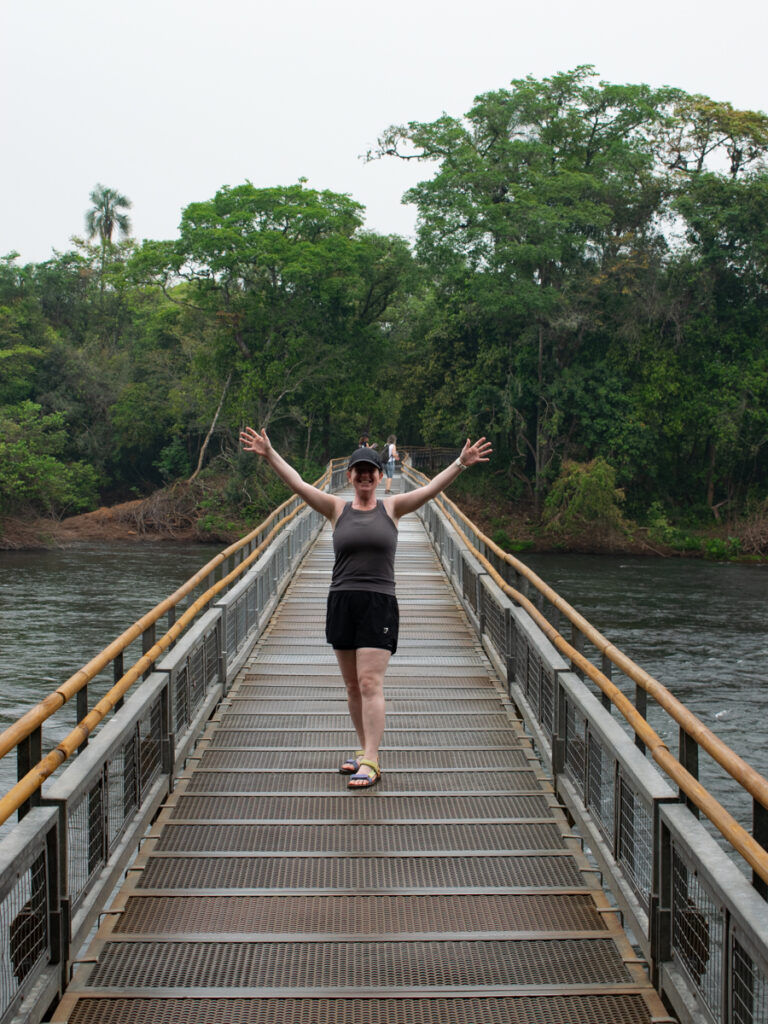
The Brazilian side of Iguazu Falls differs from the Argentinian side in that it is just one walk, aptly named ‘the Waterfall Trail’. The walk is a very easy 1.5km paved route, offering spectacular views from the very start (you will literally want to take a photo the second you step off the bus).
The walk finishes at the breathtaking Devil’s Throat platform, offering some of the most special (and wettest) views of the falls you will encounter throughout your Iguazu experience. I have to note, though, it gets incredibly busy here, so expect a little wait to get the perfect view.


More Things to Do on the Brazilian Side
🚤 Macuco Safari Boat Tour: This three-stage adventure is the most in-depth way to see the Brazilian side of the Falls. It starts with a 2km adventure in the specialist electric vehicles, followed by a 600m hike. The tour finishes with a boat tour under the falls – a unique and exhilarating way to enjoy the area.
🥾 Poço Preto Trail: This trail is for keen hikers keen to explore deeper into the national park. It’s just under 10km and best enjoyed with a guide who will highlight the amazing fauna and wildlife.
🚁 Helicopter Ride: From the Brazilian side, you can opt for a 10 or 30-minute helicopter ride over the Falls, for a truly bucket-list experience.

Visiting Parque das Aves
As mentioned, you don’t need all day to see the Brazilian side of Iguazu Falls; almost all tourists head across the bird park across the road to enjoy the afternoon.
Candidly, I wasn’t that excited to head here after being blown away by the beauty of the falls over the last two days. But Parque das Aves is a must-visit attraction for a reason!
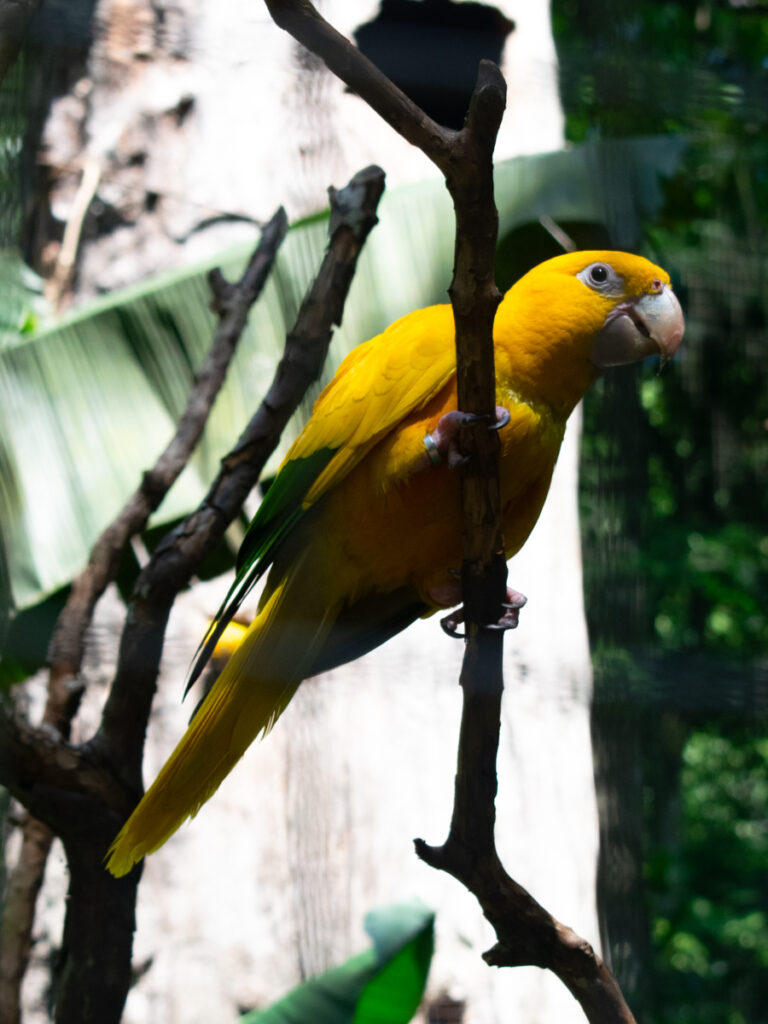
Located just minutes from the falls, this 16-hectare bird park is home to over 1,200 birds from 140 species, many of which are native to South America.
Visitors can stroll through vast aviaries and get up close to exotic species like toucans, macaws, and flamingos. The park emphasises conservation, providing a sanctuary for rescued and endangered birds. Interactive experiences, such as feeding sessions or holding macaws, make it ideal for nature lovers and families.
Parque das Aves also houses butterflies, reptiles, and lush tropical flora, adding to its vibrant ecosystem. Guided tours and an on-site café enhance the visit. Open year-round, it’s a unique way to experience Brazil’s biodiversity and support wildlife preservation efforts.
Tips For Visiting the Brazilian Side of Iguazu Falls
💦 Bring a waterproof jacket, you will get wet!
🚕 Uber is widely available and affordable, but expect a wait at peak times.
☀️ Carry sunscreen and bug spray.
👟 Wear flat, comfortable shoes. Although not a difficult walk, it can be wet and slippery in places.
Useful Links for Travelling Argentina & Brazil
🚢 Get Your Guide & Viator for booking the best day trips
🛌 Booking.com & Hostelworld for your accommodation needs
🚌 Busbud for long-distance buses
🚙 Discover Cars for comparing car rentals
MORE ARGENTINA & BRAZIL INSPIRATION:
8 Epic Things to Do in Mendoza, Argentina
How to Get to Iguazu Falls From Buenos Aires
The Perfect Buenos Aires Itinerary (3, 4 & 5 Days)
How to Visit Sugarloaf Mountain in Brazil
Amazing Things to Do in Rio de Janeiro
Three Weeks in Brazil: A Complete Itinerary
PIN IT FOR LATER:




I just could not go away your site before suggesting that I really loved the usual information an individual supply on your guests? Is gonna be again steadily to investigate cross-check new posts.